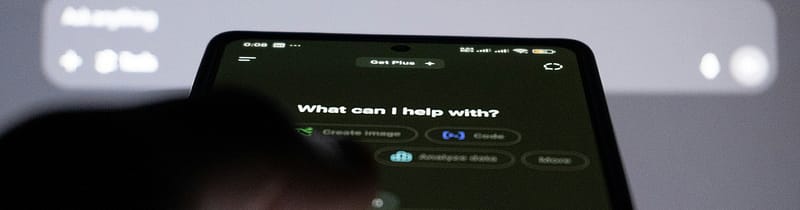

As Luke Farkas wrote recently, “AI has a way of pulling attention toward what it can do because the capabilities are impressive and easy to demonstrate.” From a creative perspective, that’s undoubtedly true. AI can generate an image, a video, or even an essay in a matter of moments.
Will it be good? That depends entirely on who is using the tool.
Because no matter how sophisticated the technology becomes, AI is still a tool. We may give it a name, a profile picture, and a conversational interface, but it doesn’t bring experience, perspective, curiosity, or intention to the work. Those things still come from people.
Creative people find the tools they need
When George Lucas started filming Star Wars: A New Hope, he couldn’t have imagined that one day he’d be trading puppeteers for CGI characters. But he did know he didn’t have the tools he needed to create the vision he had, so he pushed for them.
It’s worth asking whether directors like James Cameron would have had the technology required to create films like Avatar if people like Lucas hadn’t spent decades pushing the boundaries of what filmmaking tools could do. Creative people embrace new technologies as long as those technologies help them bring an idea to life.
Why AI produces different results for different people
Listening to some of the discussion around AI, you’d think the tool was doing all the work, but if you see a bodybuilder, you don’t look at a 45-pound weight and think, “That must be a better weight than all the other 45-pound weights.” The weight is simply a tool. The real value is in the discipline, consistency, knowledge, and mental toughness required to transform the body using it.
A casual user can ask AI to generate a video of a three-year-old child playing in a splash pad and it will happily do so. The result may even be competent. The child runs through the water. The sun is shining. The assignment is complete.
An experienced creative approaches the same task differently. They know what time of day they want. They know how the light should feel. They know whether the scene should feel nostalgic, playful, cinematic, or documentary. They think about camera movement, composition, color, emotion, and story before the AI generates a single frame.
The camera never made someone a photographer. Photoshop never made someone a designer. Final Draft never made someone a screenwriter. AI is no different.
What AI means for healthcare marketing
Creativity exists to accomplish something. It is a tool to drive emotion, behavior, memory, and action. These things are critical in healthcare marketing.
At their best, the value artists and creators bring is the perspectives, observations, and ideas that go into the work they create. It’s the ability to uncover a human truth, connect unrelated ideas, recognize real-time cultural tension, or frame a problem differently than everyone else in the room.
AI is exceptionally powerful at expanding execution. It raises the floor for what is possible. A room full of people can generate different work, even with access to the same tools, because they start from different experience, judgment, observation, and ideas.
How to get better creative work from AI
One of the easiest ways to improve the quality of AI-generated work is to stop treating AI like a search engine and start treating it like a creative collaborator… or an intern.
If you hand an intern a vague assignment, you shouldn’t be surprised when the result is vague. If you ask for an image of an apple, you’ll get apples — lots of them. Some good, some bad, most forgettable. If you want a Golden Delicious with a slight bruise on the side and the remnant of a leaf on the stem, ask for it. If you’re happy with any apple that shows up, then don’t be surprised when every other content creator shows up with an apple just like yours.
Before the work begins, have a sense of what you’re trying to create. Know how it should feel, what references matter, what details to emphasize, and which to ignore. The people getting the most out of AI are bringing a point of view to the process and using the technology to help execute it.
What comes next
At this point, arguing whether AI belongs in creative work feels a bit like arguing whether writers should return to typewriters…or erasable pens.
Creative people will adopt tools that help bridge the gap between imagination and execution. Digital editing replaced razor blades and tape. Designers traded drafting tables for software. Every generation finds new ways to bring ideas into the world, and AI is simply the latest tool in that progression. The question of whether creative people will use it has been answered. I’m more interested in what they’ll do with it.
Additional resources
Some of these ideas deserve more space than a single article can provide. If you’d like to dig deeper, start here.
There is no “right” AI strategy in healthcare marketing, only yours (No registration required): A deeper exploration of the organizational characteristics that shape AI strategy, including the archetype and fluency concepts that help explain why the same recommendation succeeds in one organization and stalls in another.
AI resource hub: A collection of articles, guides, and practical resources for healthcare marketers navigating AI adoption.