

Women are driving a major shift in healthcare, and menopause care is at the center. More than ever, women are actively seeking answers, researching symptoms, and engaging across the healthcare ecosystem.
This growing engagement highlights a critical opportunity in healthcare: leveraging better tools to guide women through one of the most complex and underserved phases of life.
The menopause continuum.
As awareness around menopause symptoms and long-term health risks continues to grow, health systems have an opportunity to better support women through earlier intervention, preventive care, and more personalized care experiences.
The menopause continuum and its long-term health risks
Menopause is not a single event. It is a continuum that can span 10 to 30 years, impacting nearly one-third of a woman’s life. That continuum includes perimenopause, menopause, and postmenopause. Each stage brings about its own set of physical, cognitive, hormonal, and emotional changes.
During this stage of life, women may experience a variety of symptoms ranging from sleep disruption, hot flashes, and brain fog to mood changes, fatigue, and metabolic shifts.
Emerging research also links the hormonal changes that take place during menopause to increased risks for cardiovascular disease, cognitive decline, Alzheimer’s disease, genitourinary disorders, and other metabolic health concerns.
Because every woman’s experience is unique, there is no standard roadmap for menopause care. Many women are unsure which symptoms are normal, when to seek care, or which providers can help address both immediate concerns and long-term health risks.
A woman initially seeking answers about sleep disruption or brain fog may also benefit from cardiovascular screening, metabolic assessment, or coordinated follow-up care during the menopause transition.
Menopause care as a preventive women’s health opportunity for health systems
Search trends and patient behavior show a clear shift. Women are looking for answers to a wide range of symptoms related to fatigue, brain fog, sleep disruption, hormonal changes, hot flashes, mood changes, and weight fluctuations.
That search for answers often becomes broader engagement with the healthcare system. For health systems, it spans across service lines, including primary care, OB/GYN, cardiology, and specialty care, making women a key driver of healthcare utilization and decision-making.
As women become more informed and engaged, their expectations are changing. They increasingly expect a healthcare experience that’s easier to navigate, more personalized, and better connected across providers and specialties. For many, menopause becomes the catalyst for that shift.
Yet despite growing awareness and increasing patient engagement, many health systems still lack scalable ways to identify needs early, personalize outreach, and connect women to the right care at the right time.
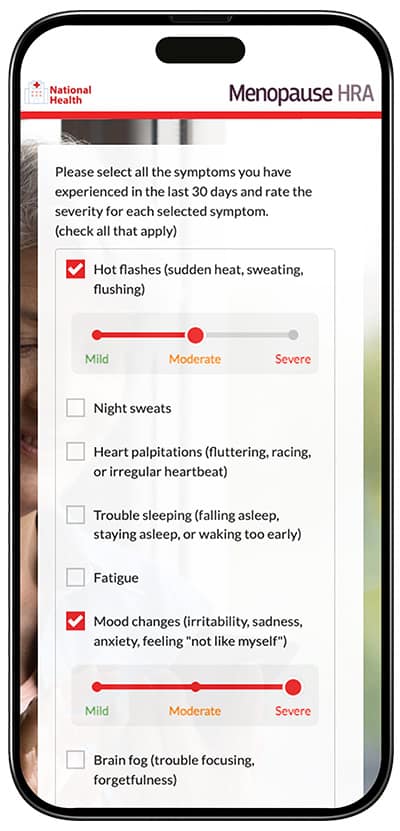
A health risk assessment designed for women during this stage of their life
Built with a consumer-first approach, Unlock’s new menopause-focused women’s health risk assessment (HRA) helps turn uncertainty into action.
It provides women with:
- A clearer understanding of their symptoms
- Identifies potential risks
- Guides them toward the right care pathways
And allows health systems the ability to:
- Identify high-intent patients earlier
- Support stronger patient engagement
- Improve care navigation and timely intervention
- Measure marketing ROI
The bottom line
Women aren’t waiting. They are raising their hands, asking questions, and expecting better care experiences. Health systems that meet this demand with the right tools can strengthen patient relationships and drive meaningful growth.
A Women’s Health HRA enables your organization to engage a high-value audience, expand women’s health services, and improve both quality of life and long-term health outcomes.
Menopause brings complex and often unexpected changes. But it also presents a powerful opportunity for earlier, more proactive care. Unlock’s Menopause Continuum HRA ensures you’re ready to respond.
Why Unlock Health
For more than 20 years, healthcare organizations have used Unlock HRAs to engage patients, support service-line growth, and connect people with care.
- 20+ years HRA experience
- 2,000+ care facilities supported
- 3 million+ completed assessments