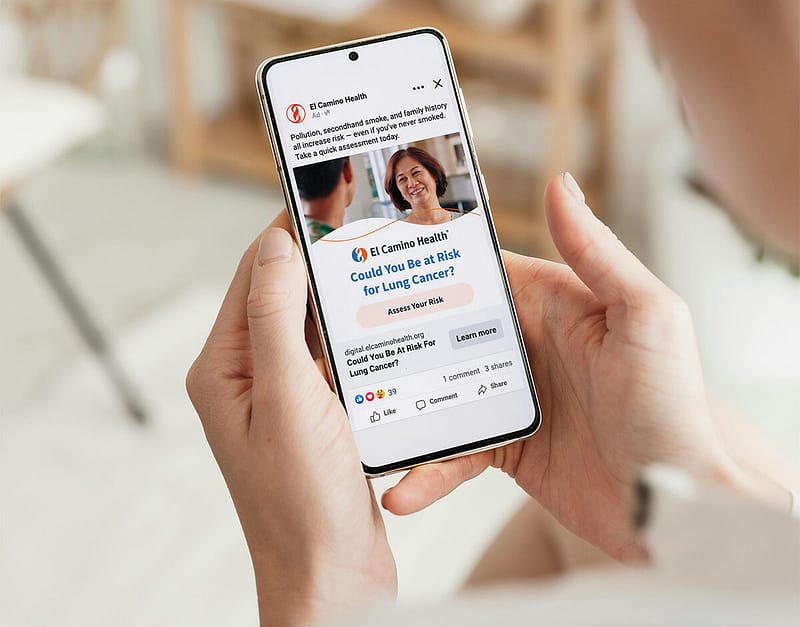

Relying solely on the standard search engine results page is a high-risk strategy in a zero-click world.
Search strategies are still important, and paid search still captures high-intent demand. But as AI-assisted search absorbs more early research and patients move across more channels before they act, health systems need more than one path to patient acquisition.
Conversion growth sources must diversify beyond search.
That does not mean adding channels for the sake of adding channels. More media does not automatically create a stronger acquisition strategy. YouTube, Google Demand Gen, programmatic display, streaming video, connected TV, audio, paid social, maps, HRAs, calls, and scheduling tools can all play useful roles across the journey. The harder work is giving each channel a clear job, then measuring whether it moves patients toward care.
In healthcare, that measurement has to be privacy-safe by design.
Healthcare compliance is non-negotiable
Channel diversification sounds straightforward until healthcare rules enter the room, politely remove their glasses, and start asking very specific questions.
A retail marketer can often optimize quickly against purchase behavior. A health system has to be more careful. What data is being collected? What signal is being passed back to an ad platform? Could the signal expose sensitive information? Does the vendor relationship support healthcare’s privacy and security requirements? Can marketing improve performance without creating compliance risk?
Health systems should not have to choose between legal safety and marketing performance.
That balance is becoming more important as the patient journey spreads across more environments. A patient may see a video, ask an AI tool a question, search again, click a map result, open an HRA, call a location, and schedule later. If measurement cannot connect those moments safely, leaders are left with activity they cannot fully trust.
Traditional, sloppy tracking methods that rely on native ad platform pixels are a massive liability in a post-cookie, HIPAA-regulated environment. Healthcare organizations need clean, compliant optimization signals that support AI-driven campaign performance without exposing sensitive data. That usually means working with a vendor with a data platform designed to promote HIPAA compliance.
Privacy is the constraint that makes diversification measurable, defensible, and scalable.
New channels need clear jobs
Programmatic display, streaming video, connected TV, and audio can help health systems build broad awareness and support measurable patient acquisition throughout the middle and upper funnel. Video can educate, explain, and build confidence. Audio can extend reach into moments when people are not actively searching. Connected TV can support brand and service-line awareness before a patient has narrowed the field.
YouTube and Google Demand Gen can also play a larger role as conversion growth sources diversify beyond search. In an increasingly zero-click search environment, these campaign types can reach patients across more of the marketing funnel, including discovery, education, consideration, and action.
Managed together, these channels can help health systems intercept users across a broader digital footprint, including connected TV, podcasts, maps, and other discovery environments.
But each channel needs a purpose.
A CTV campaign may build awareness for a service line before demand appears in search. A Demand Gen campaign may support patients who are researching options and need clearer next steps. Paid social may surface education, physician credibility, or patient stories earlier in the journey. Search may capture ready demand. Maps and calls may reveal local action. HRAs may help patients move from broad research into a guided experience.
The media mix should follow the patient’s intent, not the novelty of the channel.
If every channel is judged by the same last-click standard, upper- and mid-funnel channels may look weaker than they are. If every channel is judged by loose engagement metrics, leaders may mistake attention for acquisition. Healthcare marketers need to connect each channel’s role to qualified patient actions wherever possible.
Lessons from outside healthcare still need healthcare rules
Retail, hospitality, and financial services can teach healthcare marketers a lot about how consumer expectations are changing. As Jamie Mermelstein has written in From conversational commerce to conversational care, best-in-class experiences from outside healthcare can surface new interaction models and behaviors that healthcare organizations should understand and thoughtfully adapt.
Healthcare does not need to reject what other industries are learning from conversational commerce, streaming media, personalization, or AI-assisted discovery. But it does need to translate those lessons through healthcare’s privacy, compliance, access, and trust requirements.
A health system has to ask harder questions. What data is being used? What signal is being passed back to the platform? Does the workflow protect patient privacy? Can marketing learn from campaign performance without exposing sensitive information or creating compliance risk?
That is the difference between borrowing a useful lesson and importing a bad habit with better branding.
AI makes privacy-safe measurement more important
As Google rolls out more AI-driven search and ad experiences, traditional bidding mechanics built around manual keyword targeting will continue to change. The new environment favors richer intent signals, stronger landing experiences, and more flexible campaign architecture.
Marketers will no longer only bid on exact phrases like “orthopedic surgeon near me.” They will need to position their brands as trusted answers when AI-assisted experiences help patients navigate more complex questions.
That shift makes optimization signals more important, not less.
By feeding platform algorithms richer contextual signals, health systems can better align campaign architecture with generative bidding environments.
AI-driven campaign tools need data to learn. But healthcare cannot feed those systems every available signal and hope the compliance team enjoys surprises. The goal is to pass clean, compliant optimization signals back to ad platforms so campaigns can improve without sending protected or sensitive information where it does not belong.
This is where privacy-safe measurement becomes part of performance strategy. It gives health systems a way to support smarter bidding, better audience development, and stronger campaign optimization while protecting patient trust.
The point is to build the system so privacy and performance can move together.
In healthcare, channel diversification without measurement creates noise
Adding channels can make a media plan look more sophisticated. It can also make reporting harder to interpret.
If a patient sees a connected TV spot, watches a YouTube video, clicks a search ad, opens a map result, and later calls a location, which touchpoint mattered? The honest answer may be several of them. But without a measurement model that connects channel activity to patient actions, teams may default to whichever signal is easiest to see.
That usually gives too much credit to the final touchpoint and too little credit to the moments that built confidence earlier.
Healthcare organizations need enough visibility to understand how dollars spent across paid search, social, Demand Gen, video, audio, maps, and other channels contribute to patient movement. Service-line strategy should shape where those dollars go. That does not mean every touchpoint will connect perfectly to revenue. Healthcare journeys are too fragmented for that kind of fantasy math. But leaders should be able to see whether channel investments are supporting the right service lines, audiences, actions, and outcomes.
Otherwise, diversification becomes a budget spread, not a growth strategy.
The goal is moving past surface-level metrics like clicks or impressions toward a clearer view of how media investment translates into patient action.
What leaders should take from this shift
Health systems need a diversified, measurable, privacy-safe response to the changing patient journey.
Patients are moving through AI-assisted research, video, social, maps, calls, HRAs, scheduling flows, and other touchpoints before they choose care. The acquisition system has to meet them across more of that journey without weakening privacy, trust, or measurement discipline.
That requires giving each channel a clear purpose, identifying the patient actions that matter, and building privacy-safe measurement that connects media activity to outcomes wherever possible.
Healthcare marketers do not need more channels simply because more channels exist. They need a channel strategy they can measure, defend, and improve.
That is what turns diversification from media experimentation into patient acquisition strategy.
Want the full picture? Download The new economics of patient acquisition to see how AI-assisted search, service-line economics, channel diversification, and privacy-safe measurement are reshaping healthcare growth strategy.